Monday, 8 May 2017

Evaluation - Question Three

What Kind of Media Institution Might Distribute
Your Media Product and Why?


A distributor is a company that is responsible for marketing and making a film accessible. There are different types of  distributors are independent and mainstream, they are different due to amount of money that have available that leads to differences in production quality and the way the film is marketed and how accessible the film will be

Image result for disney logo

An example of a big media distributor is Disney, Disney is major media conglomerate and member of the Big Six, and have acquired huge brands such as Marvel and Star Wars. Disney have lots of departments in different sectors of productions, this means that they would be able to supply required resources that could increase the production quality. They would also be able to pump large sums of money behind marketing the film and also be able to distribute the film to the furthest reaches. This would probably lead to commercial success, as the film would be a supply and demand type of film 

Image result for film 4

An example of an independent film distributor is Film 4. Film 4 is a Independent British Film Distributor partnered with Channel 4 and can use this partner to help distribute and promote films, they usually distribute films that target a niche audience. Film 4 as an independent film distributor does not have a large budget this means that they will not be able to spend as much money on promotion, production cost ( Effects, Cameras, Cast) and distribution, this means that the film may have more limited than that of a member of the bid six's film. 


Taking all this into account I believe that Film 4 would be more likely to distribute my film as my film is a British film and the production quality of my film is probably not of the standard for a Big Six distributor to get behind.

Evaluation - Question Two

How Does Your Media Product Represent Particular
Social Groups?


For most social groups have a dominant representation, which becomes more of a stereotype of troupe for a type of people, it is generally formed by media products and these representations can be taken on by the general public. Examples of dominant representation are males are the hero or violent, etc and another on would be the females are damsels in distress / need rescuing.

Image result for female representation in media

My media product also has forms of representation within it. For example the teacher is the authoritative figure in this situation and when challenged it angers the teacher to such an extent that he is willing to harm a student. This also plays on the dominant representation of males being violent and wanting to be the alpha in a situation as when his status as the authority figure is challenged his immediate reaction was to retaliate with violence.

                                  Image result for bossy teachers                                 

The students in the opening conform to the stereotypes of teenagers as in the establishing shot of the classroom the students are loud, boisterous and seem to not respect authority, a typical representation of teenagers. The student also became disruptive and this negative action is one that the some media products, like the news portray as the norm especially for teenage boys, which the disruptive student was. This also relates to gender representation as the boy was the louder more disruptive student whereas the girls are more quite and reserved and even seem to behave when the teacher enters the class, which is somewhat submissive - a common representation of female personalities.
Image result for teenagers in mediaImage result for teenagers in media

Wednesday, 3 May 2017

Evaluation - Question One

In What Ways Does Your Media Product Use, Develop or Challenge Forms and
Conventions of Real Media Products?


1. Close Ups

In these two films they used close ups to highlight the emotions, or lack therefore of, on the faces of the characters. For example in the film The Ring the girl, Samara takes up a majority of the screen and is the only thing in focus in the shot behind what appears to be an out of focus building, this is significant as otherwise the pale girl would have not stood out as much among the pale surroundings. It is also strange that the girls hair is in front of her face hiding most of it with exception of an eye, her nose and her mouth. This goes against the purpose of a close up but it is still possible to make out the expression of the girl and that she is facing the audience that makes it more unsettling and .

Similarly in The Shining a close up is used but this time it is a fully focused shot and the face of the character is framed between two pieces of the wooden door, drawing more attention to to it. The strong facial expression clearly show up and are evident to the audience.  

         Image result for example of thriller movies using close up              Image result for example of thriller movies using close up

My group and I also decide to use close ups in our, we did this in order to proper convey the emotions that the teacher felt to the audience because the teachers motives are as a result of his emotions.


2. Over the Shoulder


The over the shoulder shot is take for behind a person, it usually frames the head, back or shoulder. It can be used when characters are having conversations, it can also be used to show a individual's features and details while showing where they are moving, as well as that it can be used to show a individual, group or even a scenario from the shoulder of an individual, this can allow the individual's reaction to the goings on
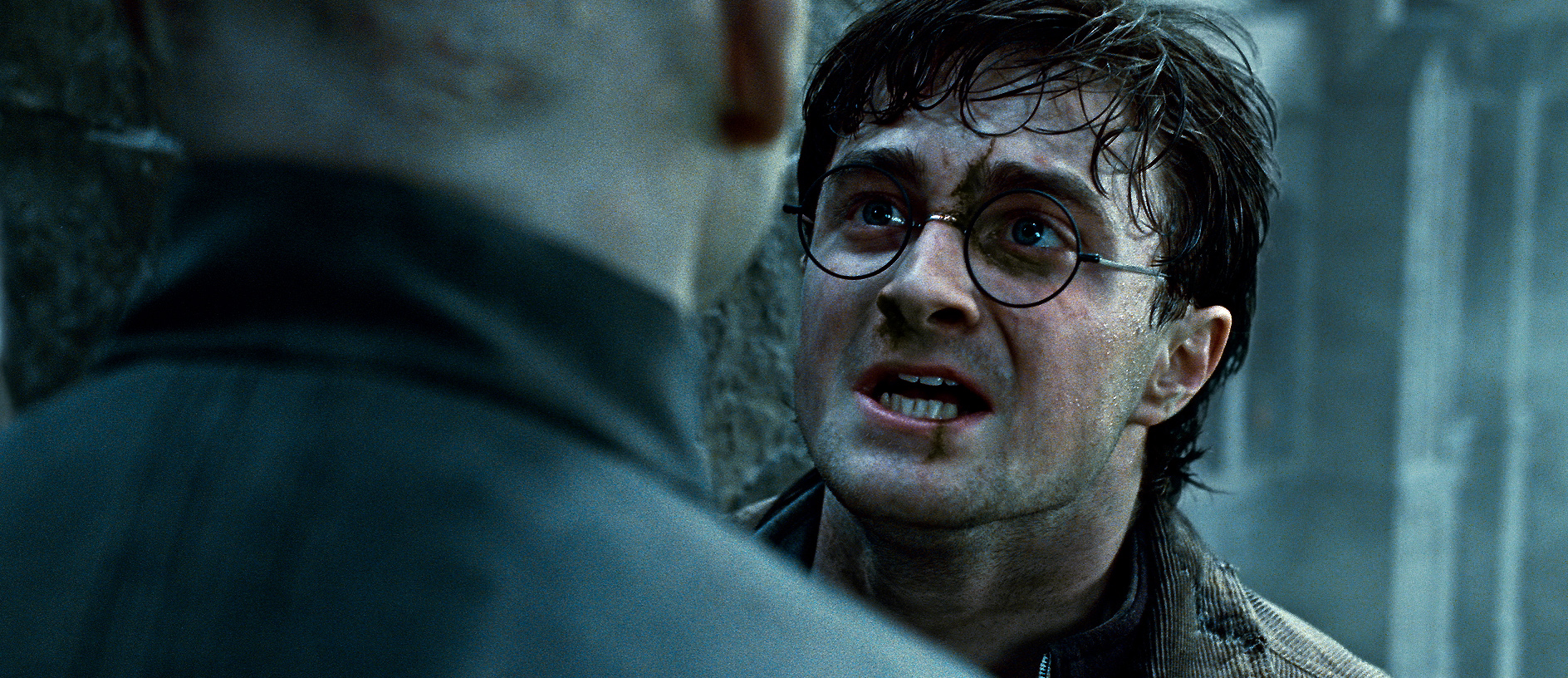
                                  Image result for movies using over the shoulder shot

I used over the shoulder shot of the teacher walking down the corridor, the walk of the teacher is very slow and eerie and gives off a very strange, even sinister vibe and it also gives a view of the scenery as the teacher walks down the corridor. The over the shoulder shot also reveals the back of the teacher and the teacher is position very strangely, even ominously as he has his hands in a very awkward and sinister position, the camera also zooms in on the hands, this gives of an odd and tense feel to the audience as a result of the body language. I also used a over the shoulder shot of the student walking down the corridor, but this time in the opposite direction, but this time the students walk is faster and has more of a natural feel to it only to be stopped by the teacher

3. Mystery


To give my opening a sense of mystery and therefore suspense, I tried to achieve this via the use of shadow, In the scene where the teacher and student meet, I positioned the teacher against the lighting in order to naturally give a silhouette of the teacher hiding any detailed feature which would give away the mystery. However I could have done this more effectively as it is still quite clear who the silhouette belongs to. The shadow also give off a sense of danger and fear which tells the audience that something is not right

4. Black Screen


In my opening I use a black screen in between two seen in which action is implied to have taken place. This built up suspense because as the tension ramps up the audience is then 'starved' of the what could be happening but the sinister, eerie music we used allow for the tension that was there to transfer and also be added upon as the audience then waits to see the result. Audiences can also come up with the own ideas as to what happens during the blackout, this means the audience may resonate more with the film as they will imagine, in conjunction with the result, what satisfies them most. Black Screens can also be used to fill in two scenes that may not have footage that bridges them naturally.

5. Establishing Shots


In my opening I used establishing shot to set the location as well as that I used establishing shots to convey what the atmosphere is like in a location, this is usually the way establishing shots are used, for example the establishing shot of the outside of the school was used to show the inactivity of what is otherwise very busy. In other scene, for example the classroom was set up via an establishing shot, in this circumstance, it was used to build realism. It can be used to also allow the audience to relate as using a particular location could be more relateable, hence why our film was set in a classroom as our target audience is teenagers. I used out of focus shot when using establishing shots of location, to subtly tell the audience that something is not quite right and that things are not as they seem here, but it comes back into focus when it says "KEEP OUT", which is a clear sign of danger.


Friday, 7 April 2017

Film Opening

Please enjoy the final cut of our media opening of  " After School Hours "!!


Feedback


This is the feedback we received from a audience member of our audience when we first screened our opening, we took this feedback we received from the audience regarding the rough cut we then took this information applied it to our production and as a result improved our openings quality and continuity.

Tuesday, 4 April 2017

Evidence of Filming

These are pieces of photo evidence showing when Caleb was filming some of our scenes as my partner, Caleb and I took a picture of him whilst he was filming as proof of our filming. We were filming in a place in which the lighting was low the use of this natural lighting gave the scene a more natural feel. This was because for the scene we were shooting would be more effective with less light, Caleb also used the zoom feature on the camera. He shot this scene multiple times to make sure the scene was as we intended.